The story opens in a bleak prison yard where the power dynamics are clearly skewed. A hardened inmate — the prison bully — casts his shadow over the new guy, taunting and humiliating him in front of others. It’s a classic act of dominance: showing the newcomer who calls the shots, who owns the space. The audience expects the new guy to buckle, to accept his inferior place. But this is no ordinary new inmate.
In fact, the twist is immediate: unbeknownst to the bully and the rest of the cellblock, the new guy is a former special operations soldier — someone trained in tactics, discipline, leadership, survival. He’s not just resilient; he’s formidable.
What begins as a scene of humiliation turns into one of transformation. The special ops soldier doesn’t just endure the bullying, he analyzes the environment: the bully’s patterns, the weak links in the power structure, the way the yard is controlled. Then he makes his move.
He starts with small acts. A quiet intervention when another inmate is threatened. A protective stance in the mess hall. Subtle actions build trust. The bully and his crew notice — and they don’t like it. They expect submission, not leadership.
But our protagonist doesn’t go full frontal immediately. He leverages his training: he engages in observation, builds alliances, identifies who is loyal to the bully out of fear and who is merely following. He speaks the language of the prison system: respect, loyalty, leadership, clarity of rules. He introduces a new rule: protection of the weak, fairness in the mess line, dignity even in confinement. That upsets the hierarchy.
When the bully tries to assert dominance again — mocking the special ops guy, trying to shame him — the response is not rage or revenge but a composed counter. He uses strategy: he corners the bully socially, undermines the bully’s alliances, wins over those the bully relied on. The tables begin to turn.
The bully is unmasked: the strongman façade is revealed to be built on fear and intimidation rather than genuine strength. In contrast, the special ops man displays calm confidence, tactical thinking, and earned loyalty. Soon enough, the yard begins to shift. Inmates who were silent now stand up. Inmates who were fearful now cooperate. A new balance emerges.
Next, comes the jailbreak plan. The special ops guy, with his background, sees what the prison administration overlooks: weaknesses in surveillance, blind spots in guard shifts, coordination gaps. He organizes an escape — not just physical, but symbolic. He leads a breakout of sorts: inmates liberating themselves from the tyranny of the bully and the oppressive yard culture. He’s not just fleeing; he’s freeing.
The jailbreak is dramatic: guards are surprised, alarm bells ring, chaos ensues. But because of the planning and leadership, what could be a massacre becomes a controlled operation. The inmates follow one leader instead of a mob chasing escape. The bully is sidelined, his control broken. The special ops man emerges as the true leader.
In the aftermath, the yard is transformed. The narrative flips: the new guy becomes the central figure, the protector and leader. The bully is relegated, his dominance revoked. The inmates rally around a new code: dignity over fear, respect over intimidation. The special ops guy leads with earned trust, not brute force.
This story is an intense fusion of action, strategy, psychological warfare, and redemption. The physical setting — a prison yard — becomes a microcosm of power dynamics, leadership, respect, and survival. The special ops king isn’t just muscle; he’s mind. He reads the environment, manipulates strategy, adapts tactics. He wins not solely by might but by intelligence, character, and cohesion.
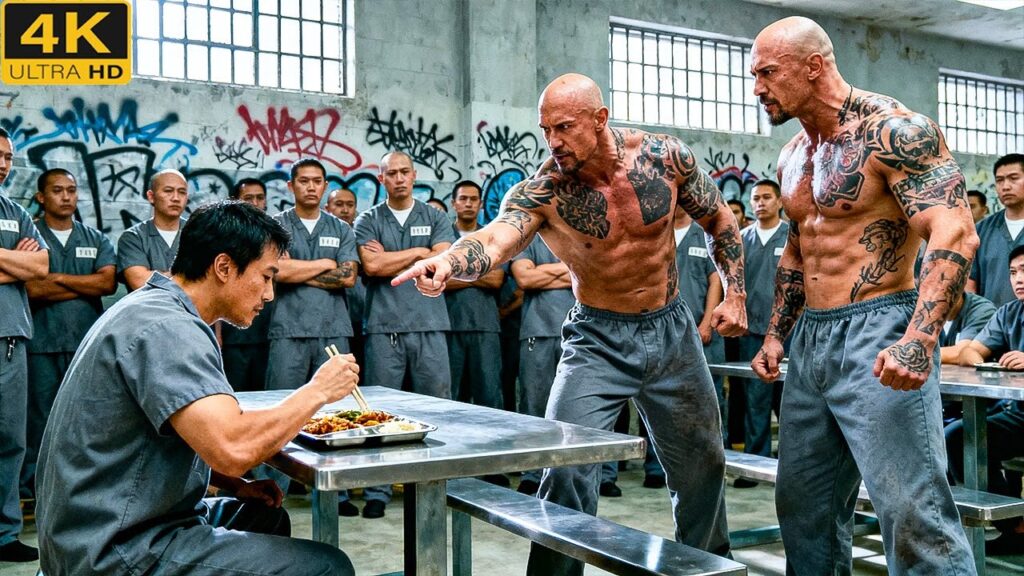
What resonates most is the theme of underestimated power. The bully assumed dominance because he had the numbers, the fear, the reputation. But the special ops soldier had something far more formidable: discipline, leadership, purpose, and the willingness to change an entire environment. He didn’t just fight back; he restructured reality.
The video captivates because it blends raw prison drama with elite military precision. The scenes of mockery, the yard’s sneers, the scrawled graffiti, the weight of isolation — all juxtaposed with call-outs, tactical whispers, strength in stillness, the plan unfolding. It’s high tension, then catharsis.
Importantly, the narrative isn’t simply about vengeance. It’s about transformation and liberation. The bully’s mockery is the catalyst. But the special ops man uses it as the spark, not the end. He leads a movement. He tames the chaos. He turns a situation of ridicule into one of empowerment — not just for himself, but for the oppressed inmates around him.
In the climax — the jailbreak — he orchestrates escape not merely physically but socially. The inmates who were once victims become agents. The bully’s era ends. The new order begins. The yard changes tone. Power is redefined.
In a broader sense, this is a story about leadership in adverse conditions. It’s about what happens when someone with high training enters a world built on fear and finds a way to convert that fear into respect, that weakness into strength. It’s about the power of integrity in a corrupt system. It’s about the ascent of the unrecognized hero.
If you enjoy stories of underdogs turned victors, of strategy and action, of character-building in brutal environments — this video fits the bill. It’s raw, gritty, and yet uplifting. It illustrates that true dominance isn’t established by how loud one roars, but by how steadily one leads, how thoughtfully one acts, and how one uses adversity as a catalyst for change.
In short, here’s what stands out:
- The bully’s initial dominance and mockery set the stage.
- The new inmate’s background as a special ops soldier subverts expectations.
- He uses observation, strategy, calm leadership rather than brute retaliation.
- He builds alliances, undermines the bully’s power structure.
- He leads a jailbreak — both literal and symbolic — freeing the yard from fear.
- He redefines power from intimidation to respect; from chaos to order.
- The transformation is collective: the yard changes, the inmates change, the bully is dethroned.
- The story highlights leadership, resilience, tactical intelligence, and redemption.
I’d recommend you check out the video for the full experience — the tension, the visuals, the action-sequences. And if you like it, we could dig deeper: analyze specific scenes, talk about the leadership tactics used, compare them to real special-ops training, or even explore similar movies/videos. Would you like to do that?